(Nanowerk News) Research and Markets has announced the addition of the "Nanotechnology - World R&D Report 2008 - Research in Nanoscience and Nanotechnology" report to their offering. This bibliometric report examines scientific activity in nanoscience using scientific papers, as well as intellectual property in nanotechnology using patents granted by the USPTO. The central aim of the scientometric and technometric analyses is to identify areas in which high-output, high-intensity, and high-impact research is being conducted. For this purpose, emphasis is placed on ranking research at the country, company and university levels. In addition, the report examines how nanoscale research and technology are evolving over time and features detailed analyses of eight non-mutually exclusive domains of nanoscale R&D. Nanoscience and nanotechnology are hotbeds of R&D wherein emergent properties of matter, which are present only at extremely small feature scales, are discovered and exploited. R&D Reports uses bibliometric indicators calculated on peer-reviewed papers in the Scopus database and granted patents in the USPTO database to produce multicriteria rankings and collaboration networks of countries, universities and companies. These show, at a glance, the leaders' scientific and technological positions in eight key domains of nanoscience and nanotechnology: General Nanoscience and Nanotechnology Materials Electronics and Computing Optics and Photonics Nanoelectromechanical Systems (NEMS) Medicine and biology Energy Environment Metrology
Key findings include: The scientific output in nanoscience increased at a compound annual growth rate of nearly 16% during the last decade. The scientific output in Republic of Korea and China exhibit spectacular growth. The number of patents granted has also grown rapidly (10%). Nanomaterials, nanophotonics, nanoelectronics and nanoscience in medicine & biology represent the largest concentration of R&D. Growth is particularly fast in emerging domains, namely NEMS, energy and environment.
For more information visit http://www.researchandmarkets.com/research/5e25cc/nanotechnology_w
Source: Research and Markets
Showing posts with label Science Policy. Show all posts
Showing posts with label Science Policy. Show all posts
Wednesday, December 17, 2008


Wednesday, October 29, 2008
A World of Science in the Developing World
A World of Science in the Developing World
The public and policy-makers are increasingly looking to the scientific community to address critical global problems. Finding solutions will require the collective insights and experience of scientists, policy-makers, industry and non-governmental groups. A World of Science in the Developing World reflects the expertise of members and associates of TWAS, the academy of sciences for the developing world, and coincides with its twenty-fifth anniversary.
Nature has published as supplement collection of articles by eminent developing world scientists. Most of them are free access...
READ MORE...
Source: Nature
The public and policy-makers are increasingly looking to the scientific community to address critical global problems. Finding solutions will require the collective insights and experience of scientists, policy-makers, industry and non-governmental groups. A World of Science in the Developing World reflects the expertise of members and associates of TWAS, the academy of sciences for the developing world, and coincides with its twenty-fifth anniversary.
Nature has published as supplement collection of articles by eminent developing world scientists. Most of them are free access...
READ MORE...
Source: Nature
Patenting of publicly funded research
Is Bayh-Dole Good for Developing Countries? Lessons from the US Experience
Recently, countries from China and Brazil to Malaysia and South Africa have passed laws promoting the patenting of publicly funded research, and a similar proposal is under legislative consideration in India. These initiatives are modeled in part on the United States Bayh-Dole Act of 1980. Bayh-Dole (BD) encouraged American universities to acquire patents on inventions resulting from government-funded research and to issue exclusive licenses to private firms, on the assumption that exclusive licensing creates incentives to commercialize these inventions. A broader hope of BD, and the initiatives emulating it, was that patenting and licensing of public sector research would spur science-based economic growth as well as national competitiveness. And while it was not an explicit goal of BD, some of the emulation initiatives also aim to generate revenues for public sector research institutions.
We believe government-supported research should be managed in the public interest. We also believe that some of the claims favoring BD-type initiatives overstate the Act's contributions to growth in US innovation. Important concerns and safeguards —learned from nearly 30 years of experience in the US— have been largely overlooked. Furthermore, both patent law and science have changed considerably since BD was adopted in 1980. Other countries seeking to emulate that legislation need to consider this new context....
Anthony D. So and six co-authors, Is Bayh-Dole Good for Developing Countries? Lessons from the US Experience, PLoS Biology, October 28, 2008.
Source: PLoS Biology
Recently, countries from China and Brazil to Malaysia and South Africa have passed laws promoting the patenting of publicly funded research, and a similar proposal is under legislative consideration in India. These initiatives are modeled in part on the United States Bayh-Dole Act of 1980. Bayh-Dole (BD) encouraged American universities to acquire patents on inventions resulting from government-funded research and to issue exclusive licenses to private firms, on the assumption that exclusive licensing creates incentives to commercialize these inventions. A broader hope of BD, and the initiatives emulating it, was that patenting and licensing of public sector research would spur science-based economic growth as well as national competitiveness. And while it was not an explicit goal of BD, some of the emulation initiatives also aim to generate revenues for public sector research institutions.
We believe government-supported research should be managed in the public interest. We also believe that some of the claims favoring BD-type initiatives overstate the Act's contributions to growth in US innovation. Important concerns and safeguards —learned from nearly 30 years of experience in the US— have been largely overlooked. Furthermore, both patent law and science have changed considerably since BD was adopted in 1980. Other countries seeking to emulate that legislation need to consider this new context....
Anthony D. So and six co-authors, Is Bayh-Dole Good for Developing Countries? Lessons from the US Experience, PLoS Biology, October 28, 2008.
Source: PLoS Biology
The Future of Food: How Science Will Solve the Next Global Crises.
The Future of Food: How Science Will Solve the Next Global Crises.
Forty years ago, advances in fertilizers and pesticides boosted crop yield and fed a growing planet. Today, demand for food fueled by rises in worldwide consumption of meat and protein is again outpacing farmers ability to keep up. It's time for the next Green Revolution.
READ MORE...
Source: Wired Magazine
Forty years ago, advances in fertilizers and pesticides boosted crop yield and fed a growing planet. Today, demand for food fueled by rises in worldwide consumption of meat and protein is again outpacing farmers ability to keep up. It's time for the next Green Revolution.
READ MORE...
Source: Wired Magazine
Tuesday, October 21, 2008
Science in India on the rise
Thomson Reuters Analyzes India's Growing Share of World's Scientific Papers
The Scientific business of Thomson Reuters announced the results of a survey assessing India's growing scientific prominence. In the September/October issue of Science Watch, Thomson Reuters analyzes data from its National Science Indicators and Essential Science Indicators to show Indias steady increase in research output and impact since 2000.
Such analysis is a hallmark of Science Watch, which uses unique citation data to provide rankings and reports on todays most significant science.
In 1985, Indian researchers accounted for 12,500 research papers indexed by Thomson Reuters. Between 1985 and 2000, this number barely exceeded 14,000 annually. Then, in 2000, India began to see a significant rise in its scientific output, by 2007 reaching more than 27,000 papers.
For more information, go to http://www.thomsonreuters.com/
The Scientific business of Thomson Reuters announced the results of a survey assessing India's growing scientific prominence. In the September/October issue of Science Watch, Thomson Reuters analyzes data from its National Science Indicators and Essential Science Indicators to show Indias steady increase in research output and impact since 2000.
Such analysis is a hallmark of Science Watch, which uses unique citation data to provide rankings and reports on todays most significant science.
In 1985, Indian researchers accounted for 12,500 research papers indexed by Thomson Reuters. Between 1985 and 2000, this number barely exceeded 14,000 annually. Then, in 2000, India began to see a significant rise in its scientific output, by 2007 reaching more than 27,000 papers.
For more information, go to http://www.thomsonreuters.com/
Monday, October 6, 2008
China and India's energy problems
China and India's energy problems
It took some time today. In two long articles, Reuters talk about the future of energy in China, and India's Vice President of the draft speech at the conference are all for energy. Both, the issue of energy efficiency and economic growth, and the amount of energy to the problem have a common point.Reuters coverage of China starts that Beijing suburb east ring road 5 line from the story of the Sinopec gas station has begun. The gas station is unable to supply gasoline to the truck in the raw, and saying go somewhere another. Trucks say, we do not go anywhere, because we can not move without gasoline. At the end of the article, the recent drastic increase in the wholesale of diesel per liter up 5.29 yuan to 6.23 yuan. Then, Sinopec stand has a shorter raw of trucks, because of the impact of energy policy, it is said.China is blessed with natural resources is likely, if per capita it is not. China’s coal is the world's third largest reserve, and, in 2007, the China)s production was accounted for 40 percent of the world. However, if used as it does, coal would be disappearing in 80 years, oil in 15 years, and natural gas in 30 years. China’s energy consumption per GDP is three time an eight times of the United States and Japan. That has been we are paying attention.The Chinese government has a plan the current energy per 10,000 yuan GDP, equivalent to about 1,460 dollars , to be go down to a 20 percent cut in 2010.
That means , in 2005, TCE was the equivalent of 1.22 tons of coal and will be 0.98 tons in 2010. In the 11th Five-Year Energy Development Plan, for 2005-2010, the growth of energy consumption reduced to 3.5 percent and, energy consumption in 2010 will be to 2,446,000,000 tons of coal equivalent.Vice-President of India has touched on this point, but it is not match with our sense. According to him, Indian to earn a dollar GDP1 with 0.16kg of oil equivalent using electricity, China's response 0.23kg, the United States 0.22kg, and the world's average of 0.21kg. The loss of power problem, it is important for India. It is now 36 percent loss in India and it is worse than the world average of 28 percent.Both of the two articles have, on renewable energy, a lot of character. Both the development of hydropower is considered as a major pillar of renewable energy. China's nuclear power is also still planning on going to be room for expansion.
Both have a point of how to curb coal-fired to be saved. It is going to say with a common point.For bio-fuels, Vice President of India has an important point. First, solar and bio-fuel dependence on the land, his saying “land intensity”, are his concern. For example, cover with solar power in Japan and 250 million people are said to be sacrificed. Shikoku Island in Japan is comparable to the population and land on this point. Also, for a scattered collection of bio-fuels, Google saying is that the intelligence network of transmission lines is required and it may be arevolution.ReferencePhilippines●081004A Philippines, Manila BulletinERC pegs WESM prices at NPC TOU rates for Oct.
billinghttp://www.mb.com.ph/BSNS20081004136998.htmlLaos●081004B Laos, .alertnet.orgLaos dams threaten homes, incomes and fish, say campaignershttp://www.alertnet.org/db/an_art/20316/2008/09/3-151757-1.htmIndia●081004C India, pib.nic.inVice President Inaugurates ‘India Energy Conference’http://pib.nic.in/release/release.asp?relid=43332China●081004D China, china.org.cnChina's road to energy securityhttp://www.china.org.cn/business/news/2008-10/04/content_16564426.htm
Sunday, September 28, 2008
‘Research interest growing in India’
Microsoft Research India on the trends shaping the scene..
“The situation here is always improving. We at Microsoft Research India got about 60 to 70 submissions when we started. Now we get about 400 a year. The numbers have doubled in other institutions, too.”
Ravikanth Nandula
Compared to a thousand doctorates in computer science that come out of American universities every year, India produces 50. But the situation here is improving, P. Anandan, Managing Director of Microsoft Research India, says.
Excerpts from a chat with eWorld:
Could you tell me a little bit about the idea behind setting up a computer science research lab?
I was already interacting with the Indian research community for close to a decade before this lab was conceptualised.
As part of my job (leading a group researching into computer vision at Microsoft, Redmond) I would attend various technological events where research papers are presented by professors and IITians. And a lot of those papers were from third year and final year students.
At the time when I did my B.Tech (in 1977) from IIT Madras I could not tell what writing a paper even meant! That was one of the first things that made me realise that a change was on.
A second point is, back in 2003-2004, a certain area of research was becoming interesting — ICT (information and communication technologies).
It made sense that if you wanted to do research, the developing countries were the place to go to.
And India was the best place, with its opened economy, strong educational foundations and the resulting opportunities. It is still easily a leading destination.
But wasn’t the talent flying out of India at that time?
That is true of today. And that is definitely true of yesterday. But reverse migration is also happening. People who have gone abroad in the 1970s and 80s want to come back and contribute.
The economy had opened up and opportunities for people who wanted to come back were there.
In fact, setting up the labs was a recognition of these changing conditions.
How does the research environment in India fare, say, vis-a-vis, the US ?
We produce about 50 Ph.Ds a year in computer science. The US, about one thousand. Last year was especially good for them with 1,500 Ph.Ds. But don’t ignore the fact that about a quarter of them are from Indian students.
To do research, we need a critical mass of people. We need four or five faculty members who’re interested and a few students rally around them and then things get to happen.
Is this situation changing?
The situation here is always improving. We at Microsoft Research India got about 60 to 70 submissions when we started. Now we get about 400 a year. The numbers have doubled in other institutions, too.
Can you tell me how your research activities are structured?
We have about 60 people; 52 do research. Each research area has one or two top people, world-renowned, who attract other researchers.
At the middle, we have fresh Ph.Ds from around the world, not just India. The third one are an interesting group: fresh graduates from B.Tech and M.Tech who come and work with us.
These are assistant researchers who work with us and eventually go for a Ph.D. They are really good! Very bright!
You are a research facility that’s attached to a company. How different is it for a prospective researcher from working in an academic institution?
There are two things that stimulate a researcher: One is peer recognition and the other is the impact his research has on the larger society.
The best way a technological researcher can affect the society around him is to work through the company that makes the technological products. There is a satisfaction when a thousand peers cheer you in a seminar hall and then there is an altogether different satisfaction when a billion people use the products that your research made happen. We offer them both.
You also hold an annual research symposium. Tell us about it.
It’s called TechVista. It is part of our efforts to create awareness about what research is and the potential that research has to make a global impact. It is a one-day symposium that brings together some of the world’s leading researchers, scientists and academics.
A number of Turing award winners (the most prestigious award in computer science) have been speakers at previous editions of TechVista and this year will also feature a Turing award winner,
Prof. John Hopcroft, as a speaker.
We’re holding it in Chennai on October 1. It’s open to all.
rkanth@thehindu.co.in
Source: Hindu Business Line
“The situation here is always improving. We at Microsoft Research India got about 60 to 70 submissions when we started. Now we get about 400 a year. The numbers have doubled in other institutions, too.”
Ravikanth Nandula
Compared to a thousand doctorates in computer science that come out of American universities every year, India produces 50. But the situation here is improving, P. Anandan, Managing Director of Microsoft Research India, says.
Excerpts from a chat with eWorld:
Could you tell me a little bit about the idea behind setting up a computer science research lab?
I was already interacting with the Indian research community for close to a decade before this lab was conceptualised.
As part of my job (leading a group researching into computer vision at Microsoft, Redmond) I would attend various technological events where research papers are presented by professors and IITians. And a lot of those papers were from third year and final year students.
At the time when I did my B.Tech (in 1977) from IIT Madras I could not tell what writing a paper even meant! That was one of the first things that made me realise that a change was on.
A second point is, back in 2003-2004, a certain area of research was becoming interesting — ICT (information and communication technologies).
It made sense that if you wanted to do research, the developing countries were the place to go to.
And India was the best place, with its opened economy, strong educational foundations and the resulting opportunities. It is still easily a leading destination.
But wasn’t the talent flying out of India at that time?
That is true of today. And that is definitely true of yesterday. But reverse migration is also happening. People who have gone abroad in the 1970s and 80s want to come back and contribute.
The economy had opened up and opportunities for people who wanted to come back were there.
In fact, setting up the labs was a recognition of these changing conditions.
How does the research environment in India fare, say, vis-a-vis, the US ?
We produce about 50 Ph.Ds a year in computer science. The US, about one thousand. Last year was especially good for them with 1,500 Ph.Ds. But don’t ignore the fact that about a quarter of them are from Indian students.
To do research, we need a critical mass of people. We need four or five faculty members who’re interested and a few students rally around them and then things get to happen.
Is this situation changing?
The situation here is always improving. We at Microsoft Research India got about 60 to 70 submissions when we started. Now we get about 400 a year. The numbers have doubled in other institutions, too.
Can you tell me how your research activities are structured?
We have about 60 people; 52 do research. Each research area has one or two top people, world-renowned, who attract other researchers.
At the middle, we have fresh Ph.Ds from around the world, not just India. The third one are an interesting group: fresh graduates from B.Tech and M.Tech who come and work with us.
These are assistant researchers who work with us and eventually go for a Ph.D. They are really good! Very bright!
You are a research facility that’s attached to a company. How different is it for a prospective researcher from working in an academic institution?
There are two things that stimulate a researcher: One is peer recognition and the other is the impact his research has on the larger society.
The best way a technological researcher can affect the society around him is to work through the company that makes the technological products. There is a satisfaction when a thousand peers cheer you in a seminar hall and then there is an altogether different satisfaction when a billion people use the products that your research made happen. We offer them both.
You also hold an annual research symposium. Tell us about it.
It’s called TechVista. It is part of our efforts to create awareness about what research is and the potential that research has to make a global impact. It is a one-day symposium that brings together some of the world’s leading researchers, scientists and academics.
A number of Turing award winners (the most prestigious award in computer science) have been speakers at previous editions of TechVista and this year will also feature a Turing award winner,
Prof. John Hopcroft, as a speaker.
We’re holding it in Chennai on October 1. It’s open to all.
rkanth@thehindu.co.in
Source: Hindu Business Line
Wednesday, September 24, 2008
Editor of "Science" urges China to cultivate research, talent
BEIJING, Sept. 24 (Xinhua) -- A leading American scientist said China should encourage projects that "continually generate innovative ideas and technologies" in its scientific endeavors.
China has made very good scientific progress over the past 30 years, said Bruce Alberts, editor-in-chief of the American journal Science, noting China has become a leader in fields such as material science.
Alberts, who became editor of the magazine in March, was here to deliver two speeches and meet with prominent scientists. The magazine featured the latest Chinese research into genetically modified cotton as its cover story in the Sept. 19 issue.
China needs to support more small independent projects and more young scientists to generate innovation, he said, adding that achievement should be measured not by the quantity but the quality of scientists' papers.
Alberts said a nation's "scientific temper" was important to its sustainable development.
"We need good scientific education with an emphasis on active enquiry for all nations," he said in a speech on "Science and the World's Future" at Tsinghua University on Tuesday.
"For each of our nations to benefit from science, we must keep science healthy," Alberts said. "Good science must continually generate innovative ideas and technologies."
He was the president of the United States National Academy of Sciences from 1993 to 2005. During that time, he visited China almost every year.
Alberts, also a renowned molecular biologist at the University of California, San Francisco, said that scientists need to "have a much larger presence in world affairs".
He is one of the co-chairs of the Inter Academy Council, representing 15 academies of science and equivalent organizations in China, Brazil, India, the United States, the United Kingdom and other countries.
"I found his talk quite useful and China's scientific policies could benefit from referring to his opinions," said Fan Chunliang, a researcher at the Institute of Policy and Management of the Chinese Academy of Sciences.
"I was quite inspired by the words 'science knows no country, knowledge belongs to humanity', which he quoted from Louis Pasteur," said Wu Wei, a doctoral candidate at Tsinghua University. "I think we should all make a strong effort to help science become 'the torch that illuminates the world'."
Science, with 1 million subscribers worldwide, is sponsored by the American Association for the Advancement of Science.
Alberts said that he hoped the magazine would become a powerful platform for setting scientific standards and bringing outstanding science all over the world into public view.
Alberts said that with the opening of the Asia-Pacific news bureau in Beijing last October, the magazine's coverage of China had increased. He hoped that the level of reporting about China could be sustained, while India, Brazil and other developing countries could also get more coverage.
Source: http://news.xinhuanet.com/english/2008-09/24/content_10104723.htm
China has made very good scientific progress over the past 30 years, said Bruce Alberts, editor-in-chief of the American journal Science, noting China has become a leader in fields such as material science.
Alberts, who became editor of the magazine in March, was here to deliver two speeches and meet with prominent scientists. The magazine featured the latest Chinese research into genetically modified cotton as its cover story in the Sept. 19 issue.
China needs to support more small independent projects and more young scientists to generate innovation, he said, adding that achievement should be measured not by the quantity but the quality of scientists' papers.
Alberts said a nation's "scientific temper" was important to its sustainable development.
"We need good scientific education with an emphasis on active enquiry for all nations," he said in a speech on "Science and the World's Future" at Tsinghua University on Tuesday.
"For each of our nations to benefit from science, we must keep science healthy," Alberts said. "Good science must continually generate innovative ideas and technologies."
He was the president of the United States National Academy of Sciences from 1993 to 2005. During that time, he visited China almost every year.
Alberts, also a renowned molecular biologist at the University of California, San Francisco, said that scientists need to "have a much larger presence in world affairs".
He is one of the co-chairs of the Inter Academy Council, representing 15 academies of science and equivalent organizations in China, Brazil, India, the United States, the United Kingdom and other countries.
"I found his talk quite useful and China's scientific policies could benefit from referring to his opinions," said Fan Chunliang, a researcher at the Institute of Policy and Management of the Chinese Academy of Sciences.
"I was quite inspired by the words 'science knows no country, knowledge belongs to humanity', which he quoted from Louis Pasteur," said Wu Wei, a doctoral candidate at Tsinghua University. "I think we should all make a strong effort to help science become 'the torch that illuminates the world'."
Science, with 1 million subscribers worldwide, is sponsored by the American Association for the Advancement of Science.
Alberts said that he hoped the magazine would become a powerful platform for setting scientific standards and bringing outstanding science all over the world into public view.
Alberts said that with the opening of the Asia-Pacific news bureau in Beijing last October, the magazine's coverage of China had increased. He hoped that the level of reporting about China could be sustained, while India, Brazil and other developing countries could also get more coverage.
Source: http://news.xinhuanet.com/english/2008-09/24/content_10104723.htm
Tuesday, September 23, 2008
Regional journals can boost science capacity
Regional journals are essential for building science capacity in the developing world, says Wieland Gevers.
Building significant and sustainable science capacity in developing countries is an agenda that enjoys wide support. But how best to achieve it is still open to debate.
Part of the answer lies in promoting 'regional journals' — scholarly journals published in, and containing many original papers of regional interest, but with editorial and peer review practices equivalent to high-impact journals in developed countries. These are indispensable components of truly globalised scholarship, and cost-effective catalysts for contributions from hard-pressed scientists and scholars in developing countries.
In the highly profitable Western system of commercial journal publishing (now fighting to contain the contagion of open access), hard-working authors are often described as offering their manuscripts for free, quality-assuring other scientists’ work without compensation, and then paying heavily to read published work through costly subscriptions, outrageous downloading fees and out-of-control library budgets.
But these criticisms do not recognise the benefits scientists and scholars derive from being editors, peer reviewers, and contributors. Researchers are constantly alerted to new ideas and findings, interesting citations, methodological insights, and improved conceptual thinking arising from close reading of others’ work.
READ MORE...
Building significant and sustainable science capacity in developing countries is an agenda that enjoys wide support. But how best to achieve it is still open to debate.
Part of the answer lies in promoting 'regional journals' — scholarly journals published in, and containing many original papers of regional interest, but with editorial and peer review practices equivalent to high-impact journals in developed countries. These are indispensable components of truly globalised scholarship, and cost-effective catalysts for contributions from hard-pressed scientists and scholars in developing countries.
In the highly profitable Western system of commercial journal publishing (now fighting to contain the contagion of open access), hard-working authors are often described as offering their manuscripts for free, quality-assuring other scientists’ work without compensation, and then paying heavily to read published work through costly subscriptions, outrageous downloading fees and out-of-control library budgets.
But these criticisms do not recognise the benefits scientists and scholars derive from being editors, peer reviewers, and contributors. Researchers are constantly alerted to new ideas and findings, interesting citations, methodological insights, and improved conceptual thinking arising from close reading of others’ work.
READ MORE...
Source: www.scidev.net
Thursday, September 18, 2008
World Review of Science, Technology and Sustainable Development 5(3/4) 2008
World Review of Science, Technology and Sustainable Development 5(3/4) 2008
- Technology in engineering education – essential for sustainable approaches to global technical challenges
- Computer facilitated mathematical techniques of differential equations governing engineering processes
- Generating thermodynamics phase diagrams using symbolic packages
Mathematical modelling of a single effect natural circulation evaporator. A practical lesson for undergraduate computer aided engineering courses - Analysis of generic e-learning framework
- Web-based laboratories for internet remote experimentation
- Online Thermodynamics courseware development
- Engineering design and realisation of an automatic real time weather monitoring station using commercial CAD tools
- Development of interactive learning activities in heat transfer
- Student perceptions of cooperative learning in a blended engineering course
- Virtual Reality as a training tool in engineering education
- Incorporating the systems approach in future undergraduate chemical engineering education curriculum: illustration via computer-aided process simulation laboratory exercises
Monday, September 15, 2008
Nanotech meet calls for lab-industry links
As the definition of 'nanoscale' changes every day to accommodate ever shrinking sizes in this 'science of miniatures', Indian scientists are expressing concern over the lack of research facilities and industry resources in the country. Especially, when it is time to convert the country's nanoscience 'strengths in the lab to strengths in the marketplace', they say.
doi:10.1038/nindia.2008.282
Published online 15 September 2008
Source: http://www.nature.com/nindia/2008/080915/full/nindia.2008.282.html
doi:10.1038/nindia.2008.282
Published online 15 September 2008
Source: http://www.nature.com/nindia/2008/080915/full/nindia.2008.282.html
Wednesday, September 10, 2008
Indian patent bill: Let's not be too hasty
Shamnad Basheer
10 September 2008
A new law to increase university patenting in India needs more research and public debate before being enacted, says Shamnad Basheer.
The Indian government is considering introducing a law based on the US Bayh–Dole Act — a 1980s statute that sought to promote technology transfer by giving universities and research institutions ownership of patents resulting from federally funded research.
The Indian bill has been hastily drafted and peddled across various ministries without proper forethought or public debate. Although it is not yet public, an unofficial copy of the bill — 'Public Funded Research and Development (Protection, Utilisation and Regulation of Intellectual Property) Bill, 2007' — is available on SpicyIP.
The Indian government appears to have been swayed, in large part, by romanticised accounts of the US Bayh–Dole Act. Most notably, an article in The Economist praised the act as a law that unlocked "all the inventions and discoveries that had been made in laboratories throughout the US with the help of taxpayers' money" and one that helped "reverse America's precipitous slide into industrial irrelevance." [1]
But the government has overlooked a growing body of literature that casts doubt on the wonders commonly attributed to the act. [2] Not only does the government need to assess this literature, it should also commission studies on the specific nature of university research in India and the complex relationship between academia and industry. If the bill is not sufficiently 'Indianised' it may fail to deliver.
Promoting technology transfer
As with the Bayh–Dole Act, the Indian bill is premised on the assumption that university ownership of patent rights is likely to increase the number of academia–industry collaborations. And that without it, industry may be unwilling to develop academic research into useful products for society.
It is true that a sizeable amount of public investment in Indian research is currently made without any express contract stipulating ownership over resulting patents. The proposed bill addresses this concern by providing a default position — that universities and research institutions can choose to patent any inventions arising from government funded research. But, if they fail to do so within a reasonable period of time, the option to patent passes on to the government funding agency.
This would provide more legal certainty — and consequently less transaction costs — for universities and industries wishing to collaborate. It may even act as an incentive for industries to approach universities in the first place.
It is difficult to advance any principled objection to fostering such legal certainty. Unless of course, one is opposed to the very idea of patents, as some critics of the Bayh–Dole Act appear to be. Taking this idea to its logical conclusion, these critics would suggest that India pass legislation banning all patenting of government funded research. Such a suggestion is unlikely to gain force, given that technologically proficient developing countries like India face increasing demands for patents from domestic industries. And if domestic industry can file patents, why not universities and research institutes? Particularly when the Council for Scientific and Industrial Research (CSIR) — a wide network of government funded labs — is currently the top patent filer in India.
Still, the bill's key defect lies in not leaving enough space for non–exclusive licensing, particularly in the context of platform technologies. Had it not been for Stanford University's non–exclusive licensing in relation to its famed Cohen–Boyer patents covering rDNA technology, biotechnology may not have developed the way that it did. Not only did such widespread licensing contribute to the economic success of the patents, it also permitted a number of companies to do follow–on research, rapidly advancing the frontiers of technology.
Creating wealth
The bill aspires to make universities wealthy and self–sufficient. But the ability of such legislation to generate cash may be vastly exaggerated. Empirical data from the United States shows that most universities do not make significant sums of money by licensing their technology.
In fact, the cost of operating a technology transfer office (TTO) often exceeds the money made from technology licensing. CSIR bears out this point well. While it generated approximately US$1 million in licensing revenues in 2004–2005, it spent more than twice that amount on filing patents.
India's Bayh–Dole attempt will come to nothing if it ignores this important fact regarding CSIR and its rather impressive patent numbers. The government should come up with ways of reducing the operational costs of TTOs and patents, while simultaneously increasing revenues from licensing.
Inventor rights
Perhaps the most laudable aspect of the Indian bill is that, unlike its US counterpart, it ensures that individual 'inventors' are paid at least 30 per cent of any royalties stemming from licensing. But despite this guarantee of a share in the profits, individuals are left with little option of determining how their invention can be used. For example, even if researchers wish to place their invention in the public domain or license it non–exclusively, they cannot do so — rather, the bill puts this discretionary power in the university's TTO.
The idea of achieving legal clarity on the ownership of inventions funded by public monies and thereby promoting university–industry technology transfer is, at its core, a good one.
But the current version of the Indian Bill leaves much to be desired. For one, it should ensure that, where necessary, non–exclusive licensing is encouraged. It must also embrace ways of measuring and promoting wider knowledge spillovers between research institutions, industry and society at large.
Most importantly, given that India is the world's largest democracy, the government must immediately make the bill public and foster an open and transparent debate around it.
Shamnad Basheer is an associate at the Oxford Intellectual Property Research Center.
References
[1] Innovation's Golden Goose. The Economist 365 (2002).
[2] Mowery, D., Nelson, R., Sampat, B. et al. Ivory Tower and Industrial Innovation: University–Industry Technology Transfer before and after the Bayh–Dole Act. 264pp (2004)
Source: http://www.scidev.net/en/science-and-innovation-policy/opinions/indian-patent-bill-let-s-not-be-too-hasty.html
10 September 2008
A new law to increase university patenting in India needs more research and public debate before being enacted, says Shamnad Basheer.
The Indian government is considering introducing a law based on the US Bayh–Dole Act — a 1980s statute that sought to promote technology transfer by giving universities and research institutions ownership of patents resulting from federally funded research.
The Indian bill has been hastily drafted and peddled across various ministries without proper forethought or public debate. Although it is not yet public, an unofficial copy of the bill — 'Public Funded Research and Development (Protection, Utilisation and Regulation of Intellectual Property) Bill, 2007' — is available on SpicyIP.
The Indian government appears to have been swayed, in large part, by romanticised accounts of the US Bayh–Dole Act. Most notably, an article in The Economist praised the act as a law that unlocked "all the inventions and discoveries that had been made in laboratories throughout the US with the help of taxpayers' money" and one that helped "reverse America's precipitous slide into industrial irrelevance." [1]
But the government has overlooked a growing body of literature that casts doubt on the wonders commonly attributed to the act. [2] Not only does the government need to assess this literature, it should also commission studies on the specific nature of university research in India and the complex relationship between academia and industry. If the bill is not sufficiently 'Indianised' it may fail to deliver.
Promoting technology transfer
As with the Bayh–Dole Act, the Indian bill is premised on the assumption that university ownership of patent rights is likely to increase the number of academia–industry collaborations. And that without it, industry may be unwilling to develop academic research into useful products for society.
It is true that a sizeable amount of public investment in Indian research is currently made without any express contract stipulating ownership over resulting patents. The proposed bill addresses this concern by providing a default position — that universities and research institutions can choose to patent any inventions arising from government funded research. But, if they fail to do so within a reasonable period of time, the option to patent passes on to the government funding agency.
This would provide more legal certainty — and consequently less transaction costs — for universities and industries wishing to collaborate. It may even act as an incentive for industries to approach universities in the first place.
It is difficult to advance any principled objection to fostering such legal certainty. Unless of course, one is opposed to the very idea of patents, as some critics of the Bayh–Dole Act appear to be. Taking this idea to its logical conclusion, these critics would suggest that India pass legislation banning all patenting of government funded research. Such a suggestion is unlikely to gain force, given that technologically proficient developing countries like India face increasing demands for patents from domestic industries. And if domestic industry can file patents, why not universities and research institutes? Particularly when the Council for Scientific and Industrial Research (CSIR) — a wide network of government funded labs — is currently the top patent filer in India.
Still, the bill's key defect lies in not leaving enough space for non–exclusive licensing, particularly in the context of platform technologies. Had it not been for Stanford University's non–exclusive licensing in relation to its famed Cohen–Boyer patents covering rDNA technology, biotechnology may not have developed the way that it did. Not only did such widespread licensing contribute to the economic success of the patents, it also permitted a number of companies to do follow–on research, rapidly advancing the frontiers of technology.
Creating wealth
The bill aspires to make universities wealthy and self–sufficient. But the ability of such legislation to generate cash may be vastly exaggerated. Empirical data from the United States shows that most universities do not make significant sums of money by licensing their technology.
In fact, the cost of operating a technology transfer office (TTO) often exceeds the money made from technology licensing. CSIR bears out this point well. While it generated approximately US$1 million in licensing revenues in 2004–2005, it spent more than twice that amount on filing patents.
India's Bayh–Dole attempt will come to nothing if it ignores this important fact regarding CSIR and its rather impressive patent numbers. The government should come up with ways of reducing the operational costs of TTOs and patents, while simultaneously increasing revenues from licensing.
Inventor rights
Perhaps the most laudable aspect of the Indian bill is that, unlike its US counterpart, it ensures that individual 'inventors' are paid at least 30 per cent of any royalties stemming from licensing. But despite this guarantee of a share in the profits, individuals are left with little option of determining how their invention can be used. For example, even if researchers wish to place their invention in the public domain or license it non–exclusively, they cannot do so — rather, the bill puts this discretionary power in the university's TTO.
The idea of achieving legal clarity on the ownership of inventions funded by public monies and thereby promoting university–industry technology transfer is, at its core, a good one.
But the current version of the Indian Bill leaves much to be desired. For one, it should ensure that, where necessary, non–exclusive licensing is encouraged. It must also embrace ways of measuring and promoting wider knowledge spillovers between research institutions, industry and society at large.
Most importantly, given that India is the world's largest democracy, the government must immediately make the bill public and foster an open and transparent debate around it.
Shamnad Basheer is an associate at the Oxford Intellectual Property Research Center.
References
[1] Innovation's Golden Goose. The Economist 365 (2002).
[2] Mowery, D., Nelson, R., Sampat, B. et al. Ivory Tower and Industrial Innovation: University–Industry Technology Transfer before and after the Bayh–Dole Act. 264pp (2004)
Source: http://www.scidev.net/en/science-and-innovation-policy/opinions/indian-patent-bill-let-s-not-be-too-hasty.html
Lack of industry links 'keeping Indian nanotech small'
T. V. Padma
8 September 2008 EN
[NEW DELHI] India's expanding nanotechnology research is not translating into market products due to weak links between Indian scientific institutes and industry, experts have cautioned.
8 September 2008 EN
[NEW DELHI] India's expanding nanotechnology research is not translating into market products due to weak links between Indian scientific institutes and industry, experts have cautioned.
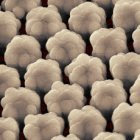 Carbon nanotubes (NASA)
The problems were discussed at a gathering of India's top scientists and representatives of the Federation of Indian Chambers of Commerce and Industry working on nanotechnology in Delhi last week (5 September).
Other problems cited include an absence of information about groups working in the sector and the domestic industry's reluctance to manufacture large quantities of nanomaterials proven to have commercial application.
India has more than 30 industries and 50 institutes engaged in nanotech research and development, with most efforts focusing on chip design, nanomedicine and nanomaterials.
Nanotechnology has potential uses in drug delivery, diagnostic kits, improved water filters and sensors, and reducing pollution from vehicles.
Since the launch of a US$250 million five-year national nanotech mission in 2007, India has seen a rise in the number of scientists working in the field and research publications, said V. S. Ramamurthy, former secretary of India's Department of Science and Technology and currently on the board of the Indian Institute of Technology in Delhi.
The national mission aims to make India a global hub by setting up clusters of research groups in the sector (see India looks to nanotechnology to boost agriculture and Preparing for take-off: Indian nanotechnology).
But there has been no corresponding increase in nanotech products in the marketplace. India needs to work on turning its laboratory research findings into commercially viable products that are either globally competitive or locally relevant, said Ramamurthy.
"We need to evolve synergies and strategies so that the strengths in the labs are converted into strengths in the marketplace," he said.
C. N. R. Rao, chairman of the Scientific Advisory Committee to India's Prime Minister, suggested Indian scientists and industry should work on 'hot' emerging technologies with tremendous potential, which are attracting the interest of researchers worldwide.
These include use of nano-scale particles of graphene, a one atom thick layer of carbon molecules that form the basic structure of graphites. The material is one of the strongest known and has uses in microelectronics and tremendous capacity to absorb the greenhouse gas carbon dioxide.
Other technologies include 'nano' zinc oxide that can be used in lasers, transistors and photovoltaics, and gallium nitride, a chemical that has applications in making cheaper, longer-lasting bulbs and torches.
Rao also suggested India should work on 'nano' forms of currently known materials that can throw up exciting applications.
Delegates at the meeting also pointed out that India does not have a systematic information base on all scientists.
Ajay Sood, professor of physics at the Indian Institute of Science in Bangalore said, "An information map on interested industry and academics is very much needed; an information platform that is easily accessible and can be updated."
Source: http://www.scidev.net/en/news/lack-of-industry-links-keeping-indian-nanotech-sma.html
CHINA: Racing ahead in patenting
CHINA: Racing ahead in patenting
Writer: Subbiah Arunachalam
Date: 07 September 2008
China today is the third most prolific patent-filing country in the world after the United States and Japan. The State Intellectual Property Office of China (SIPO) received more than 694,000 patent applications in 2007 including more than 245,000 20-year patent applications and more than 181,000 10-year patent applications, says a report by Evalueserve, an international business research and analytics company. By contrast, the Indian Patent Office received about 35,000 20-year patent applications in the fiscal year 2007-08.
"Patent filing has been growing in both China and India at about 20% a year, compared with a 7% growth rate for the US. However, SIPO received approximately the same number of 20-year applications in 1997 as the IPO did in 2007-08. This implies that India is approximately 10 years behind China," said the Evalueserve report.
If patent filings in China continue to grow at the present rate, SIPO will overtake the US Patents Office by 2012 in innovation patents. SIPO grants three types of patents: invention patents which are valid for 20 years from the date of filing; utility model or 10-year patents; and design patents. The 10-year patents are easier and faster to file than 20-year patents as they do not require any substantive examination and cost less to file.
There are several reasons for the rapid proliferation of patenting in China, especially since China joined the World Trade Organization in 2001. In China, patents are issued faster than in India: the average time taken from filing to grant in 2007 was 26 months for invention patents, 6.8 months for utility model patents and 6.6 months for design patents. In India it takes three to five years for a patent to be granted.
The Chinese government also gives grants to research institutes and universities filing a large number of patent applications. The patent office has many initiatives to create intellectual property awareness among Chinese companies.
Patent filing also reflects the increase in R&D spending and the fast-growing economy has meant more money for research. Universities are flush with funds, said Ram Deshpande, a senior researcher with Evalueserve China.
China has developed its patent system in the past two decades and today has a good searchable online patent database, a robust appeal mechanism and a hierarchy of courts for handling intellectual property disputes. Thanks to these measures, patenting activity has picked up tremendous momentum. Four million patent applications were filed between 1985 and the end of 2007 - the first million took 15 years but the last million took about 18 months.
Manufacturing is the most active sector of patenting in China, with most patents in this class pertaining to systems or machines or composition of matter in the case of drugs. The highest number of 20-year patent applications in 2007 was filed in pharma, telecom and data processing systems.
Source: http://www.universityworldnews.com/article.php?story=20080904152839794
Courtesy: Subbiah Arunachalam
Writer: Subbiah Arunachalam
Date: 07 September 2008
China today is the third most prolific patent-filing country in the world after the United States and Japan. The State Intellectual Property Office of China (SIPO) received more than 694,000 patent applications in 2007 including more than 245,000 20-year patent applications and more than 181,000 10-year patent applications, says a report by Evalueserve, an international business research and analytics company. By contrast, the Indian Patent Office received about 35,000 20-year patent applications in the fiscal year 2007-08.
"Patent filing has been growing in both China and India at about 20% a year, compared with a 7% growth rate for the US. However, SIPO received approximately the same number of 20-year applications in 1997 as the IPO did in 2007-08. This implies that India is approximately 10 years behind China," said the Evalueserve report.
If patent filings in China continue to grow at the present rate, SIPO will overtake the US Patents Office by 2012 in innovation patents. SIPO grants three types of patents: invention patents which are valid for 20 years from the date of filing; utility model or 10-year patents; and design patents. The 10-year patents are easier and faster to file than 20-year patents as they do not require any substantive examination and cost less to file.
There are several reasons for the rapid proliferation of patenting in China, especially since China joined the World Trade Organization in 2001. In China, patents are issued faster than in India: the average time taken from filing to grant in 2007 was 26 months for invention patents, 6.8 months for utility model patents and 6.6 months for design patents. In India it takes three to five years for a patent to be granted.
The Chinese government also gives grants to research institutes and universities filing a large number of patent applications. The patent office has many initiatives to create intellectual property awareness among Chinese companies.
Patent filing also reflects the increase in R&D spending and the fast-growing economy has meant more money for research. Universities are flush with funds, said Ram Deshpande, a senior researcher with Evalueserve China.
China has developed its patent system in the past two decades and today has a good searchable online patent database, a robust appeal mechanism and a hierarchy of courts for handling intellectual property disputes. Thanks to these measures, patenting activity has picked up tremendous momentum. Four million patent applications were filed between 1985 and the end of 2007 - the first million took 15 years but the last million took about 18 months.
Manufacturing is the most active sector of patenting in China, with most patents in this class pertaining to systems or machines or composition of matter in the case of drugs. The highest number of 20-year patent applications in 2007 was filed in pharma, telecom and data processing systems.
Source: http://www.universityworldnews.com/article.php?story=20080904152839794
Courtesy: Subbiah Arunachalam
2008 World Patent Report Confirms Increasing Internationalization of Innovative Activity.
2008 World Patent Report Confirms Increasing Internationalization of Innovative Activity. Increased patent filings in North East Asian countries (mainly China and the Republic of Korea) and in the US drove growth in worldwide filing of patent applications, which topped 1.76 million in 2006, representing a 4.9% increase over 2005, according to the 2008 edition of the WIPO World Patent Report.
World Patent Report: A Statistical Review (2008)
Full report is available at: http://www.wipo.int/ipstats/en/statistics/patents/wipo_pub_931.html
Source: WIPO (World Intellectual Property Organization)
World Patent Report: A Statistical Review (2008)
Full report is available at: http://www.wipo.int/ipstats/en/statistics/patents/wipo_pub_931.html
Source: WIPO (World Intellectual Property Organization)
Monday, September 8, 2008
Science in India: A progress report
Science in India: A progress report
Over at Science Watch, Christopher King has a short report on the progress of Indian science since 1981. The year 2000 was a major turning point:
In 1985, the number was approximately 12,500, and for the next 15 years the total never much exceeded 14,000. Around the year 2000, however, the number began to tick upwards, rising to nearly 17,000 in 2001, reaching 20,000-plus in 2003, and winding up at more than 27,000 in 2007.
But the citation impact continues to lag the world average in every field (check out the graphs accompanying the report). In physics, for example, citations received per paper from India is about 80 percent of the world average (3.13 vs. 3.96 per paper).
Yet another factoid that caught my attention is this bit about my field:
Materials Science, in fact, is the field in which India displays the steepest growth in representation during the period covered by National Science Indicators. In 1981, only 432 Thomson Reuters-indexed materials papers included an India institutional address—3.68% of the field. In 2007, nearly 2,300 papers with India-based authors were indexed, a share of 6.13%.
Interestingly, the previous issue of Science Watch carried a similar report about China, so some direct comparisons are possible. Overall, the science enterprise in China is about three times as large as that in India, and China's citation figures, like India's, lag behind the world average in all the fields.
Here's some interesting stuff about China's progress in materials science:
China's greatest concentration in the latest five-year period proved to be in materials science, but the change between then and now is striking and illustrative of China's progress. In the previous survey, the nation fielded roughly 15,000 materials papers, or nearly 10.5% of Thomson Reuters-indexed papers in the field. The current figures, by contrast, show more than 27,000 materials papers, representing upwards of 16% of the field. [...]
http://sciencewatch.com/ana/fea/08sepoctFea/
Over at Science Watch, Christopher King has a short report on the progress of Indian science since 1981. The year 2000 was a major turning point:
In 1985, the number was approximately 12,500, and for the next 15 years the total never much exceeded 14,000. Around the year 2000, however, the number began to tick upwards, rising to nearly 17,000 in 2001, reaching 20,000-plus in 2003, and winding up at more than 27,000 in 2007.
But the citation impact continues to lag the world average in every field (check out the graphs accompanying the report). In physics, for example, citations received per paper from India is about 80 percent of the world average (3.13 vs. 3.96 per paper).
Yet another factoid that caught my attention is this bit about my field:
Materials Science, in fact, is the field in which India displays the steepest growth in representation during the period covered by National Science Indicators. In 1981, only 432 Thomson Reuters-indexed materials papers included an India institutional address—3.68% of the field. In 2007, nearly 2,300 papers with India-based authors were indexed, a share of 6.13%.
Interestingly, the previous issue of Science Watch carried a similar report about China, so some direct comparisons are possible. Overall, the science enterprise in China is about three times as large as that in India, and China's citation figures, like India's, lag behind the world average in all the fields.
Here's some interesting stuff about China's progress in materials science:
China's greatest concentration in the latest five-year period proved to be in materials science, but the change between then and now is striking and illustrative of China's progress. In the previous survey, the nation fielded roughly 15,000 materials papers, or nearly 10.5% of Thomson Reuters-indexed papers in the field. The current figures, by contrast, show more than 27,000 materials papers, representing upwards of 16% of the field. [...]
http://sciencewatch.com/ana/fea/08sepoctFea/
Subscribe to:
Posts (Atom)
